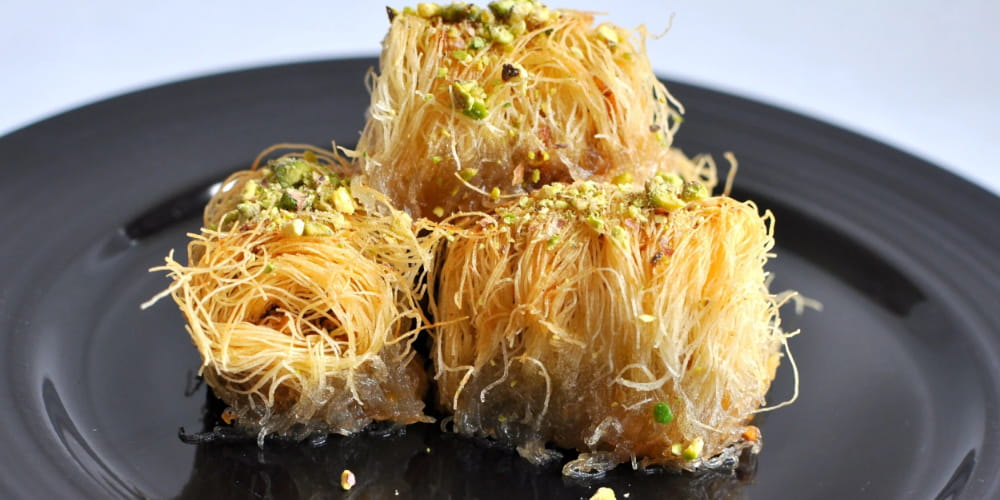
If you have seen videos of Dubai chocolate on social media, you have probably noticed the golden, crispy strands mixed into its pistachio filling. Those strands are kadayif — a pastry ingredient with a long history in Turkish, Middle Eastern and Mediterranean cuisine that has recently found an entirely new international audience.
Kadayif is particularly popular in desserts. Its fine strands become golden and crispy when baked or toasted, making it an excellent match for pistachios, walnuts, syrup, butter, chocolate, cream and many other ingredients.
Today, kadayif is no longer associated only with traditional desserts. It is increasingly used in modern confectionery, chocolate fillings, pastries and creative desserts.
Kadayif (also spelled kadaif or kataifi) is a very fine, thread-like pastry. It may look similar to extremely thin noodles or vermicelli, but it is actually a pastry product generally made primarily from flour and water.
One of its most distinctive characteristics is its texture. Once baked or toasted, the fine strands become golden and crispy. This makes kadayif particularly useful in desserts that combine creamy or soft fillings with a contrasting crunchy layer.
International recipes use several spellings, including kadayif, kadaif and kataifi. Terminology and culinary traditions vary by region, but these names commonly refer to the same style of fine, shredded pastry.
Kadayif is widely used across Turkish, Middle Eastern and Mediterranean cuisines and can be incorporated into both traditional and contemporary desserts.
One simple preparation method is to toast or bake the pastry with butter until the strands become golden and crisp. It can then be combined with pistachios, walnuts, cream, chocolate and many other ingredients.
Kadayif is commonly used for:
This versatility means kadayif can serve as the main pastry component of a dessert or simply provide an additional layer of crunch and texture.
Kadayif itself is certainly not new. Its culinary history predates today's social-media trends by a very long time. Its latest wave of international popularity, however, is closely connected with Dubai chocolate.
Dubai-based FIX Dessert Chocolatier created a filled chocolate bar combining a chocolate shell with pistachio cream, tahini and toasted kataifi. Inspired by the flavours and textures of knafeh, the bar later became a viral social-media phenomenon, particularly on TikTok.
The trend became particularly significant during 2024 and 2025. According to WGSN, content associated with #dubaichocolate accumulated 13.8 billion TikTok views between January and March 2025 alone.
The trend was soon followed by numerous confectionery companies and food businesses developing products built around the pistachio-and-kadayif combination. As a result, an ingredient previously associated primarily with traditional regional desserts became familiar to a much broader international audience.
One of the defining characteristics of Dubai chocolate is its contrasting texture.
In its classic form, the chocolate shell contains a filling combining pistachio cream, tahini and toasted kadayif. The pistachio provides a rich, creamy filling, while the toasted pastry contributes its distinctive crunch.
The combination is simple but effective: chocolate + creamy pistachio + crispy kadayif. Kadayif is therefore much more than a secondary ingredient. It provides the characteristic crispy texture that distinguishes Dubai-style chocolate from an ordinary pistachio-filled chocolate bar.
The preparation method depends on the recipe. In traditional desserts, the strands may be kept relatively long and baked with butter, nuts, cheese or other fillings.
If you want to use kadayif for Dubai chocolate or a pistachio cream dessert, a common method is:
Toasting is particularly important because this is what gives the pastry the crisp texture that contrasts so effectively with pistachio cream and chocolate.
Dubai chocolate is only one modern example of how kadayif can be used.
It can be paired with pistachios, walnuts, hazelnuts, chocolate, cream, cheese, ice cream and syrup. Toasted kadayif can also be incorporated into desserts whenever a creamy or soft component needs additional crunch.
This means the same ingredient can work in a traditional syrup-soaked dessert, a modern chocolate bar, a cake or an individually portioned dessert.
The correct storage method depends on the specific form in which the product is sold — fresh, frozen, dried or pre-toasted. Always follow the storage instructions and use-by or best-before information provided on the product packaging.
Once opened, protecting the pastry from excess moisture is particularly important when maintaining a crisp texture is required.
You can buy kadayif at the ALALI supermarket. Visit the product page to view available products, packaging, specifications, and availability.
If you run a pastry shop or confectionery business and are looking for a reliable long-term partnership with a distribution company, you can contact our team.
If you want to prepare a traditional kadayif dessert, a pistachio cream treat, or the popular Dubai chocolate at home, kadayif is the key ingredient that gives these desserts their distinctive crispy texture.
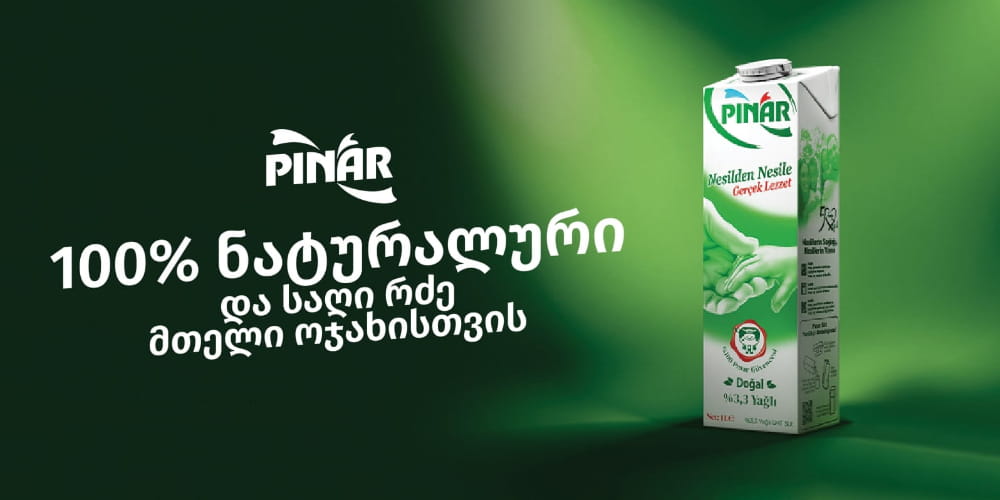
It is the main source of calcium, which is the key element for the development of the bones and...
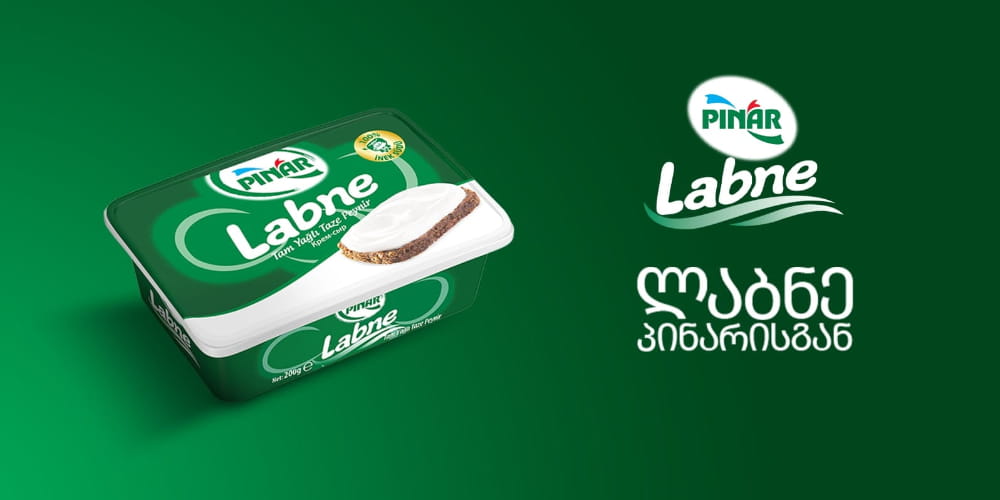
Labneh is a dairy product known for its smooth, creamy texture and mild, slightly tangy flavor....
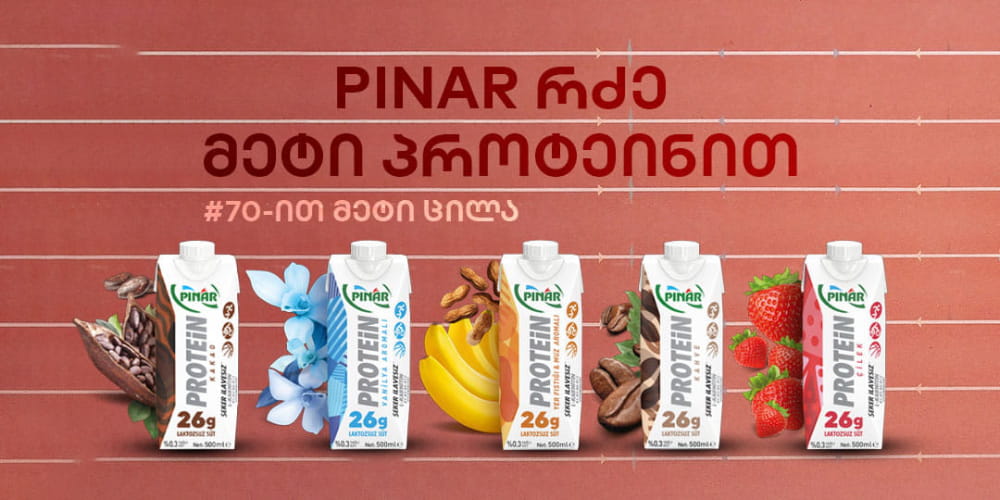
Contains 70%* more protein. *In 100 ml of the enriched milk there is 3 gr. of protein. Af...
Eker dairy products manufacturing company attaches special importance to a healthy lifestyle, t...